The Warmest Cold Spot in Town: Britain’s Bus Shelters and Their Secret Civic Life
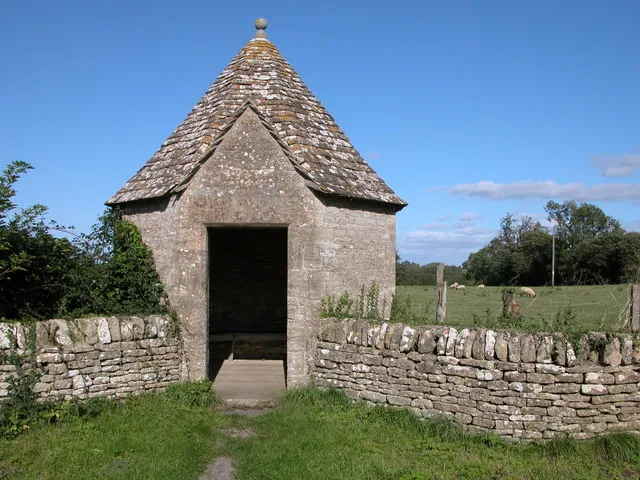
Photo: Philip Halling, CC BY-SA 2.0, via Wikimedia Commons
There are two kinds of bus shelter in Britain. The first is a glass box with a bench and a timetable behind scratched plastic. The second is a small, unheated room that happens to have a bus stop attached. In November, with the light gone by four and the wind coming off the fields, the difference matters.
A good shelter is not really about transport. It is about the pause before transport — or the pause instead of it. The bus may not come. The shelter still does. And in the gap between the timetable and real life, people leave things behind: books, notices, knitting, a laminated poem, a visitor’s book in a Tupperware box. These are the good finds.
The shelter as a room
Most of us pass bus shelters without seeing them. They are municipal furniture, like litter bins or bollards. But stand in one for ten minutes on a wet Tuesday and it becomes a room. The bench is worn smooth in the middle. The timetable is out of date, or accurate but irrelevant, because the service has been reduced to twice a week. There is a notice about a parish council meeting, a card advertising piano lessons, and a small pile of paperbacks with a handwritten sign: ‘Take one, leave one. Please no damp thrillers.’
Over the past decade, rural bus services have thinned in many parts of the country. The shelter has not disappeared with them. Instead, it has quietly taken on other work. It is a noticeboard, a book exchange, a place to shelter from a downpour, a landmark for directions, a meeting point for teenagers who are not allowed to meet anywhere else. It asks nothing of you except that you do not put your feet on the bench. That is a rare kind of civic space.
Coastal: the book swap by the sea
On a stretch of Norfolk coast, the shelter faces the water rather than the road. It has a concrete floor, a wooden bench, and a shelf of books that are mostly thrillers and cookery. The salt has got into the covers. A laminated notice explains the rules: ‘Books are for everyone. If you take one, leave one. If you leave one, make sure it is dry.’
In summer the shelter is full of walkers and dogs. In winter it belongs to locals waiting for a bus that runs every two hours, and to people who are not waiting for a bus at all. They sit with a flask and watch the sea. One afternoon I found a visitors’ book, the kind you get in a church or a small museum. The entries were mostly weather reports: ‘Very windy. Saw a seal.’ ‘Rain stopped play. Bus late again.’ ‘Left a John le Carré. You’re welcome.’
It is not a café. There is no oat milk, no Wi-Fi, no background music. That is the point. You can sit in a bus shelter without buying anything, without explaining yourself, without being moved on. In a country that increasingly charges for the privilege of sitting down, that feels quietly radical.
Hilltop: the gallery at the top of the lane
Higher up, in the Pennines, there is a shelter at a crossroads where the bus used to stop four times a day. Now it stops twice, and not on Sundays. The shelter is exposed on three sides, with a stone bench and a roof that has been repaired by someone who knew what they were doing. In the corner, a plastic tub holds a visitors’ book and a pencil on a string.
The walls are the real attraction. Local artists have pinned postcards, photographs, pressed flowers, and a poem about the view. Someone has knitted bunting in faded colours and strung it along the back wall. At Christmas, a small artificial tree appears. No one seems to know who organises it. The shelter has become an impromptu gallery, a place where people leave something beautiful for the next person, and take away the feeling that the world is not entirely indifferent.
A woman waiting there told me she had been coming to the shelter for forty years. ‘The bus is worse,’ she said. ‘The shelter is better.’ She had a point. The bus had been cancelled twice that morning. The shelter, with its bunting and its visitors’ book, was still doing its job.
Suburban: the noticeboard with a bench
In the suburbs, the bus shelter is often a plain glass box beside a parade of shops. It has a bench, a bin, and a timetable that is mostly accurate. But look closer. The noticeboard inside is a small miracle of local life: a lost cat, a choir looking for tenors, a free piano, a warning about a dodgy roofer, a card for a Spanish conversation group, and a handwritten note that says ‘Thank you to whoever handed in my purse. There are good people.’
On a Friday morning, a woman waters a hanging basket that has been attached to the shelter’s frame. No one asked her to. The basket is not official. It is just something she does. The shelter is not a community centre, but it is a place where the community leaves traces of itself. You can learn more about a neighbourhood from its bus shelter than from its estate agent’s window.
A short field guide
If you find yourself with time to spare, treat the shelter as a destination rather than a delay. Coastal shelters often have book swaps and sea views. Hilltop shelters tend to attract artists and knitters. Suburban shelters are best for noticeboards and overheard conversations. Look for laminated signs, visitor books, and the small, hopeful objects people leave behind: a spare umbrella, a packet of tissues, a note that says ‘Bus is late. Have a biscuit.’
If you are going to leave something, leave something useful. A book you have finished. A note about a cancelled service. A drawing, if you are that way inclined. Do not leave litter, and do not leave a damp thriller. The shelter has standards.
The art of waiting together
The bus shelter is a reminder that not everything has to be productive. You can wait without scrolling, sit without spending, and share a small space with strangers without any expectation of conversation. And yet conversation often happens. The shelter is a low-stakes social club, open to all, no membership required.
The timetable says the bus is due at 14.42. It is now 15.03. No bus. But the shelter is full: a man with a dog, a teenager with a cello, a woman with a bag of shopping, and me. We are waiting together, which is different from waiting alone. On the bench, someone has left a copy of a crime novel and a note: ‘Good for a long wait.’ They were right. The bus may be late, but the shelter keeps its own time.