Bread Makers, Fondue Sets and Other Monuments to Good Intentions
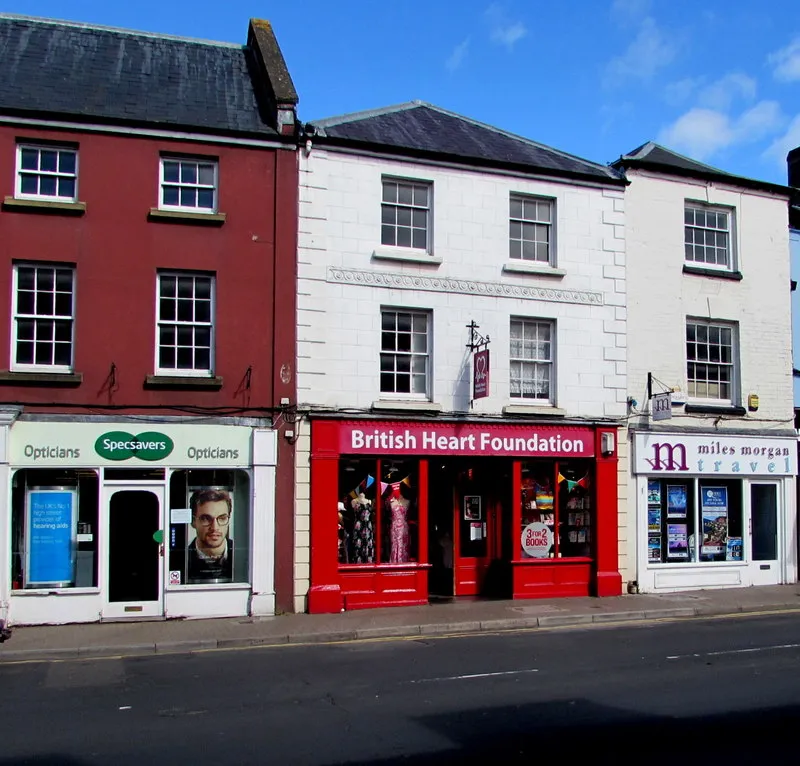
Photo: Jaggery , CC BY-SA 2.0, via Wikimedia Commons
The rain is doing that fine, persistent thing it does in mid-November, so I have ducked into a hospice charity shop on a high street that has quietly become a row of them. Where the bank used to be, there is a shop selling donated puzzles. Where the estate agent was, there is a shop selling donated coats. And at the back, past the rails of sensible trousers, is the shelf I have come to see: the bric-a-brac shelf, the place where abandoned hobbies go to be quietly rehomed.
It is, if you look at it properly, a kind of museum. Not of objects, exactly, but of intentions. Every item on it was once bought by someone who fully meant to become a person who made their own bread, or hosted fondue nights, or learned to play the guitar. The shelf is where those people gently admit that they did not.
The Archaeology of Good Intentions
My local shelf is having a good week. There is a Breville bread maker, the kind with a little viewing window in the lid, priced at eight pounds. Beside it sits a fondue set in a shade of orange that suggests the late 1970s, its six forks still in a little plastic bag. Further along, an exercise bike has been pressed into service as a clothes rail, which is at least honest. A pasta machine, still boxed. A juicer, also boxed. A cross-stitch kit of a Highland cow, the cellophane unbroken.
None of these things are junk. That is the strange thing. They are perfectly good objects that have failed at the only job they were given, which was to change somebody's life slightly. The bread maker did not make its owner into a baker. The fondue set did not make them into a host. The exercise bike did not make them into a cyclist, though it did make them into a person with somewhere to hang a damp coat.
In charity-shop terms, this is the great unsung category. We talk about the book shelves and the vintage rails, but the bric-a-brac shelf is where the country's optimism is most visible. It is a record of what we thought we might become, sold on at two pounds a time.
A Brief Taxonomy of the Shelf
After a few years of idle study, I have come to divide the shelf into types. First, the Kitchen Optimists: bread makers, ice-cream makers, yoghurt makers, waffle irons, electric carving knives, sandwich toasters. They arrive with manuals, sometimes with receipts, occasionally with the little plastic bag of spare parts still taped to the inside of the box.
Second, the Entertainers: fondue sets, decanters, cocktail shakers, pickle forks, a set of six matching glasses for a drink nobody makes any more. Third, the Craft Hopefuls: knitting needles, embroidery hoops, calligraphy sets, a sewing machine that weighs as much as a small dog and has not been threaded since 2019.
Then there are the Fitness Penitents: ab rollers, step machines, dumbbells in pairs, a yoga mat still in its strap. And finally, the Musical Dreamers: guitars with one string, keyboards with a missing power supply, a recorder that somebody's child abandoned in year four. The shelf is not a graveyard. It is a waiting room.
What the Volunteers Know
Margaret, who has worked behind the counter of a hospice shop in Shrewsbury for eleven years, tells me the bread makers are the most common donation. "We had one last month with the receipt still in the box," she says. "Bought in 2018, used twice. They always say the same thing: 'It's a good one, I just never got on with it.'"
She has a theory about January. "That's when the exercise stuff comes in," she says. "And the diet books. And the juicers. By February we're flooded." The fondue sets, she says, arrive in the autumn, usually from house clearances, usually with a note saying they were a wedding present. "Nobody ever buys them for themselves. They buy them for someone else, and then that person brings them back."
A volunteer in Leeds once told me about a guitar that came in with a handwritten label taped to the neck: "Sounds lovely, just not for me." It sold within a day. The label, he said, went with it. There is something rather touching about that, a small note of encouragement passed from one abandoned ambition to the next.
How to Spot the Genuine Find
The trick, if you want one, is to ignore the dream and inspect the parts. A bread maker is only useful if the pan and paddle are inside; without them it is a large plastic box with a window. A fondue set needs its forks, or at least a willingness to use ordinary ones. An exercise bike needs resistance, not just a seat. A craft kit is only a bargain if the threads and instructions are still sealed inside, because half a cross-stitch Highland cow is worse than none.
Check the cable on anything electrical, and check it again. Ask whether the manual is there, not because you will read it, but because the previous owner probably did not either, and a manual is a sign the thing was barely used. Look for the original box. Look for the receipt. Look, in short, for evidence of the exact failure that makes it cheap.
The genuinely useful finds are rarely the glamorous ones. They are the heavy glass jug, the good wooden spoon, the sturdy casserole dish, the pair of brass candlesticks that somebody's grandmother polished for forty years. These things do not promise to change your life. They simply do their job.
The Case for Buying Someone Else's Maybe
I leave with the fondue set. It is orange, it is ridiculous, and it cost three pounds. I do not have a plan for it, which is precisely the point. Somewhere a person once bought it with a plan, and the plan did not survive, and now it is my turn to have a maybe.
That is what the shelf is really selling, I think. Not bread makers. Not exercise bikes. A second chance at a small, specific kind of hope. The high street may be changing beyond recognition, but the bric-a-brac shelf remains one of its most honest institutions: a place where the country's abandoned hobbies are given one more go, at a price that makes optimism affordable.