Sleeping on the Newspapers: Britain's Shop Cats and the Art of Saying Hello
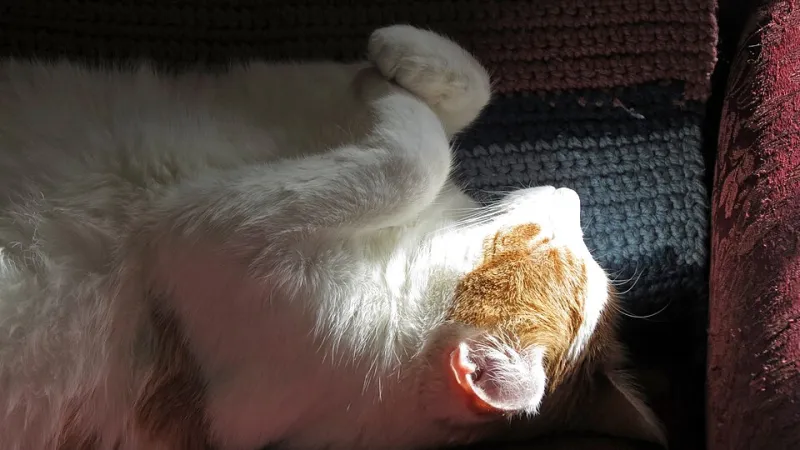
Photo: James St. John, CC BY 2.0, via Wikimedia Commons
Every corner shop has a rhythm. The fridge hums, the door sighs, the lottery terminal chirps. And then there's the fourth sound: a slow, unbothered purr rising from a stack of newspapers that have been sat on so often they no longer rustle.
Nobody can quite date the moment shop cats became a national institution. What's easier to confirm is the spread of them. A black-and-white tom in a Sheffield hardware shop, photographed so often by passing teenagers that there's a small gallery of him on the wall behind the screws. A tortoiseshell in a village stores somewhere near the Cornish coast who has apparently supervised the sub-postmistress for eleven years. A ginger who occupies a chair in a Leeds convenience store with the steely entitlement of a tenancy agreement. Names vary. Status does not.
The ones who never clock off
The odd thing about shop pets is how quickly they become civic rather than commercial. Locals stop describing the shop by its brand and start describing it by its occupant. 'The one with the cat' does the work that a fingerpost and two road signs cannot.
In a bakery in Norfolk, the cat sleeps on the flour sacks and everyone has agreed not to comment on the hygiene question because he was there first. In a secondhand bookshop in Northumberland, a grey tabby has claimed the single armchair and now determines the layout: three shelves in, a shopper must step over him to reach poetry. There is an ironmonger in a West Midlands town with a Labrador who greets the trade with a tail that sweeps the seed packets off the bottom shelf twice a week.
What these animals share is a total absence of retail ambition. They are not mascots in the marketing sense. They don't upsell. They are, instead, an accidental public service: something to look at while you wait for the card machine, something to comment on when you haven't got the exact change, something to mention to a neighbour you have never spoken to before.
An etiquette, for the uninitiated
If you are going to say hello — and you are, we both know it — there are rules, mostly unwritten and mostly sensible.
- Buy something first. It's a shop. The cat is not the attraction; it's the reason you're staying longer than planned.
- Offer the back of a hand at a sensible distance. Let them come to you. A shop cat receives perhaps forty approaches a day and has developed firm views about which ones are welcome.
- Mind the paperwork. Newspaper stacks, cash-and-carry invoice piles, the deliveries ledger — all double as beds. Do not tidy.
- No flash photography. The residents did not consent to being content.
- Don't feed. Someone is already feeding them, usually twice, usually badly, usually with a secret tin kept by the till.
- Read the ears. A Cat Protection League poster on the wall next to a bowl of water is a good sign. A cat with no water bowl and a harassed expression is not the shop's fault, but don't add to the queue.
Dogs, incidentally, operate under different rules. Shop dogs tend to be social by trade — the whippet behind the counter of a Shropshire bookshop, the elderly spaniel who sleeps under the till in a farm supplies merchant and has never once been asked to move. Ask before you pet. Some are working animals; some are simply very good at being asleep in public.
Why a cat by the till changes the maths
There is a phrase used by sociologists of place about 'third places' — somewhere that is neither home nor work, where you are recognised but not required to perform. Corner shops, pubs, barbers. A cat, strangely, strengthens the claim.
A shop with a cat has a longer memory. You can go in six weeks later and be greeted by the same unimpressed pair of eyes on the same bolt of gingham. It gives you a topic that isn't the weather and isn't money. It gives the shopkeeper a personality beyond the pricing gun. It gives children something to be gentle with, and adults permission to linger.
It is also, quietly, good for trade. People return to places where they are remembered, even by an animal that has no idea who they are. Ask anyone who has queued ten minutes for a paper because the shop is the one where the cat sits on the postbox.
The unofficial job description
If you ever find yourself drafting one, it might read: bulk storage supervisor (sunbeams), pest control (theoretical), customer liaison (asleep), window dressing (occupational).
Few jobs in Britain come with such a devoted workforce of volunteers. Locals keep an eye out when a shop closes for a fortnight. Somebody somewhere has always posted a note on the door explaining that the cat has gone to the vet and is fine. There is a whole informal welfare network operating out of fridges and cardboard boxes, and it has never needed a funding bid.
So next time you're in for a pint of milk and there's a shape on the newspapers that isn't moving, don't rush it. Put your coins down quietly. Say thank you to whoever's behind the till. And give the cat a moment of your time — because that, more than anything on the shelves, is what the place is really for.