The Red Box Has a New Job: Inside Britain’s Most Inventive Phone Kiosks
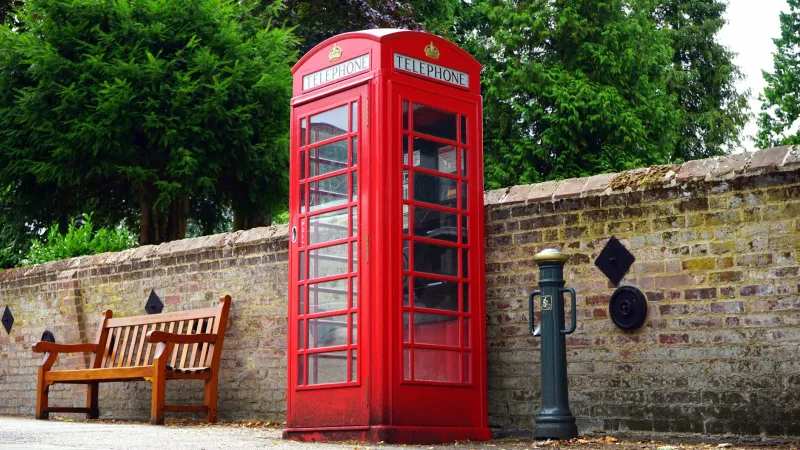
The red telephone box is one of those things you notice most when it stops doing its original job. For decades it was a punctuation mark on the pavement: a place to ring home, check a train time, or pretend to be busy while waiting for someone. In 2026, plenty of them still stand there, but many have taken on second lives. Some are miniature libraries. Some hold defibrillators. A few sell coffee, eggs, candles or zines. The best of them are not museum pieces. They are working parts of a village, a street or a small town.
A library with a door that sticks
In a village outside Shrewsbury, the box on the green is now full of books. It has no barcode scanner, no opening hours and no fines. It has a shelf, a tin for donations and a custodian called Margaret who checks it every Tuesday.
‘It is not a lending library exactly,’ she says. ‘It is a conversation with a lock on it.’
That seems about right. The shelves are a mix of crime paperbacks, cookery books, children’s annuals and a surprising number of guides to growing vegetables. There is a damp trap in the corner, a rota on the back of the door and a small sign asking people not to leave carrier bags. Margaret says the box works because someone opens it early and someone else closes it at night. The books smell of cold paper. Children treat it like a treasure hunt.
The structure itself helps. The K6 design, drawn up in the 1930s, was built to be noticed and built to last. It is small enough to feel manageable and solid enough to survive a British November. A phone box library does not need a committee room or a new building. It needs a key holder, a few shelves and a tolerant attitude to odd donations.
The box that saves lives
Less romantic, but more important, is the box in a market town in Worcestershire that now houses a defibrillator. It is painted red, kept unlocked in an emergency and checked every month by a volunteer who knows exactly what he is looking at.
‘You do not want a pretty box with a flat battery,’ he says. ‘You want pads in date, a warm cabinet and the ambulance service knowing it is here.’
This is where phone box conversions get serious. A defibrillator point is not a case of screwing a yellow box to the wall and hoping for the best. It needs a power supply, a heated cabinet in cold weather, regular checks, a named guardian and registration with the local ambulance service. The box has to be accessible at any hour. It has to be secure but not locked. It has to be understood by people who may never have opened one before.
When it is done properly, the old kiosk becomes one of the most useful things on the street. It is also a quiet lesson in civic affection. Nobody gathers to admire a defibrillator. They simply know it is there, and that is the point.
Coffee, cards and a one-window gallery
Other conversions are more playful. In a Shropshire hamlet, a box has become a tiny coffee stand: a flask, a QR code, a few paper cups and an honesty tin. In Norfolk, one serves as a village shop for eggs, jam and candles. In Fife, a box with good glass and a decent shelf has been turned into a one-window gallery, showing photographs, drawings and the occasional poem.
These are not grand projects. That is why they work. A phone box is the right size for one idea. It is weatherproof, familiar and easy to find. It can hold a noticeboard, a book swap or a small exhibition without demanding a full-time staff. It can be adopted by a parish council, a scout group, a café or a retired couple with a key and a spare morning.
It can also become a damp cupboard full of unsorted paperbacks. The difference is rarely money. It is usually a rota.
Why the red box still earns its place
The appeal is not simply nostalgia. Britain has plenty of old things that nobody wants to maintain. The phone box survives because it is useful in a very particular way: it is a landmark, a shelter, a small public room with glass sides. It says ‘here’ in a way that a laminated sign on a lamp post never will.
Conversions also reveal local ingenuity. People look at a redundant object and see a library, a food bank drop-off, a seed swap or a tiny museum of the street. That is not a small thing. It is the opposite of waiting for someone else to fix a gap.
But the affection has limits. An adopted box still needs cleaning, insurance, repairs and someone to answer the awkward questions. A book swap needs dry shelves. A honesty shop needs clear prices and secure cash. A coffee stand needs hygiene common sense. A defibrillator needs proper oversight. Romance gets you the key. Maintenance keeps the door open.
If you fancy adopting one
BT’s long-running Adopt a Kiosk scheme has allowed communities to take on redundant boxes for a nominal sum, usually £1, with upkeep falling to the adopters. It has been running since 2008, and it has produced thousands of small conversions across the UK. If you are tempted in 2026, start with the practical questions.
Who owns the box? Is it listed, or in a conservation area? Does the council need to approve a change of use? Who holds the key? Who pays for electricity? Who checks the roof, the glass and the lock? If you are installing a defibrillator, speak to the ambulance service first and plan for monthly checks. If you are opening a library, think about damp, display and donations you cannot use. If you are selling anything, think about cash, cleanliness and whether the box is really in the right spot.
Visit a few conversions before you take one on. Talk to the people who keep them going. Borrow their rota. Borrow their damp trap. Do not promise more than you can maintain.
A phone box is not a shed. It is a public promise with glass sides. The best second lives are modest, useful and slightly eccentric. They do not pretend the telephone is coming back. They simply answer a new call.
Press 1 for wonder.