Six Metres of Santa and a Thermos of Nerve: Inside the Village Lights Committee
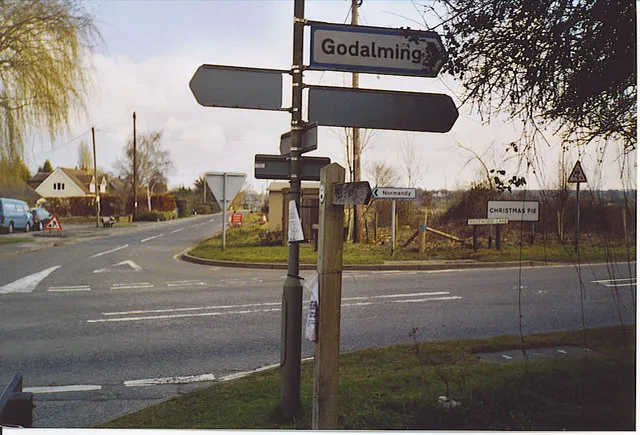
Photo: Colin Smith, CC BY-SA 2.0, via Wikimedia Commons
It is 3.40pm on the first Saturday of December, and the village Christmas lights are still in three pieces on a trestle table in the parish hall. A six-metre inflatable Santa lies on his side like a deflated bouncy castle. Next to him: two boxes of extension leads, a tin of mince pies, a clipboard marked RISK ASSESSMENT, and a thermos of tea that has already gone cold. The switch-on is in two hours. Nobody is panicking yet. This is the annual window in which panic is still optional.
The Ladder Protocol
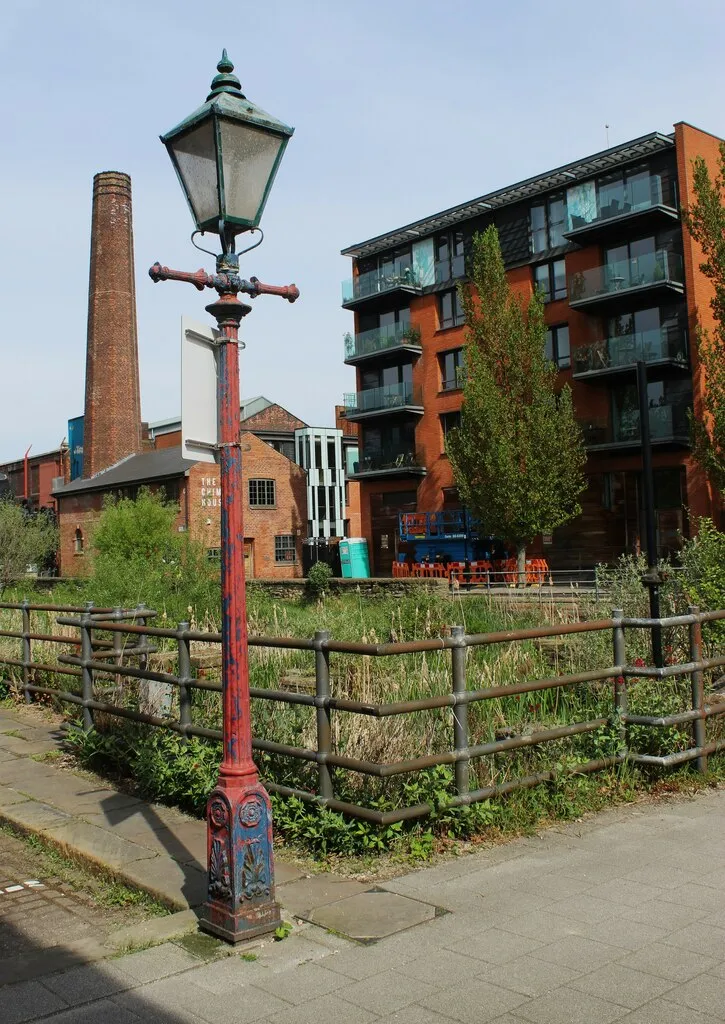
The committee has four ladders and one rule: nobody goes up alone. The tallest ladder is aluminium, older than the man holding it, and carries a sticker that says 'PAT tested' with a date that may or may not be this decade. They lay it against the lamppost with a rubber mat underneath and a second volunteer holding the bottom, not because the manual says so but because his wife does.
'It's not the height that gets you,' says Ray, who has been doing this since the lights were those big coloured bulbs that got hot enough to poach an egg. 'It's the extension lead. You get up there, you're comfortable, you've got the cable in your teeth, and then someone below says, 'Have you got the other end?' That's when you remember you're on a ladder.'
The ladders are not the only hazard. There is a tree that has to be wrapped, a war memorial that must not be wrapped, and a hanging basket bracket that has been pressed into service as a holly holder since 1994. The committee works from a laminated map that nobody entirely trusts. 'The map says there's a socket behind the bench,' says a woman in a fleece. 'The map is a liar.'
Extension-Lead Diplomacy
The village has eleven lampposts, four trees and one war memorial. Each needs power. The leads are daisy-chained with the care of a bomb disposal team, and the phrase 'fully unwound' is repeated until it becomes a kind of prayer. The owner of the hardware shop donates a reel every year and then spends the evening pretending he hasn't.
There is a long-running disagreement about the RCD. One volunteer calls it 'a bit fussy'. Another calls it 'the only reason we're not all in the dark'. The fuse box is in a cupboard under the stairs of the village hall, next to a label that reads DO NOT SWITCH OFF in capital letters and a second label that reads SORRY, SWITCHED OFF, back in 2019, with an arrow. The switch itself is brass and has been turned on by the same family since 1987.
'We had a trip last year,' says Margaret, who is in charge of the tea urn and therefore in charge of morale. 'The lights went off during the countdown. The vicar said a prayer. The fuse box said no.' They fixed it with a new plug and a short break for biscuits. This year, the plug has been tested twice. The biscuits are already open.
The Tea Urn Economy
The tea urn is the emotional centre of the operation. It is a large silver cylinder with a tap that drips if you look at it wrong, and it produces tea that is either perfect or stewed depending on which side of the table you are standing. There is squash for the children, a flask of mulled apple juice that somebody's mother has brought, and a tub of Celebrations that has been rationed by a retired headteacher.
The biscuit hierarchy is strict. Custard creams are for the ladder team. Bourbons are for the timer team. The good shortbread appears only after the switch has been thrown, and is guarded accordingly. 'You can tell how well it's going by how many biscuits are left,' says Ray. 'If there's a full tin at five o'clock, we're in trouble.'
The Timer Argument
The lights are on a timer. The timer is in the cupboard with the fuse box and the laminated map that nobody trusts. The timer is also the committee's oldest argument, a ritual as reliable as Advent.
'The timer should come on at half three and go off at ten,' says the treasurer, who likes a spreadsheet. 'Eleven,' says the woman who has done the switch for nineteen years. 'Midnight,' says a man who does not have to get up for work. They settle on quarter to eleven, which is what they settle on every year, and everybody feels briefly victorious.
The timer matters because the lights are not just for the switch-on. They are for the dog walkers at seven in the morning. They are for the people coming home from the late shift. They are for the primary school children who count the days by which trees are lit. They are also, according to the parish council, 'a matter for the insurer'. The committee respects the insurer. The committee sets the timer for quarter to eleven anyway.
Six Metres of Santa
At half four, Santa is inflated. This is not a euphemism. The inflatable is six metres tall and has the slightly surprised expression of a man who has just remembered he left the oven on. He is anchored to two ground stakes, a lamppost and a length of washing line that has been donated by a neighbour who is watching from her window with her arms folded.
'If the wind gets up, he goes horizontal,' says Margaret. 'We've had that. It's not dignified.' This year the wind is brisk but manageable. Santa wobbles. A child points. A dog barks. Somebody says 'He's not quite straight', and somebody else says 'He's never quite straight', and that is the end of it.
At five o'clock, the countdown begins. It is not a slick countdown. The microphone squeals. The crowd of perhaps eighty people includes a baby in a snowsuit, three teenagers who are pretending not to enjoy it, and a man selling raffle tickets from a tray. The numbers go from ten to one with a stumble at seven. The switch is thrown. The star at the top of the tree flickers, then holds. The Santa breathes. The village hall windows glow. There is a small cheer, then a bigger one, then the applause of people who are mostly clapping for the fact that it worked.
What It Runs On
The committee will meet in January to debrief. They will argue about the timer. They will agree that the new leads are good, that the tree was a bit thin this year, and that next year they must start earlier. They will not start earlier. In the cupboard under the stairs, the fuse box will be switched off, and somebody will forget where the leads go.
The lights run on electricity, but only just. The rest is goodwill, a thermos of nerve and the deeply held belief that a village in December should have something to look at. Next year, the ladders will come out again. The Santa will be inflated. The timer will be set for quarter to eleven. And somebody will say, 'He's not quite straight,' and somebody else will say, 'He's never quite straight.' That is how you know it is Christmas.