The Hiss Before Dark: On the Streets Where Someone Still Lights the Lamps by Hand
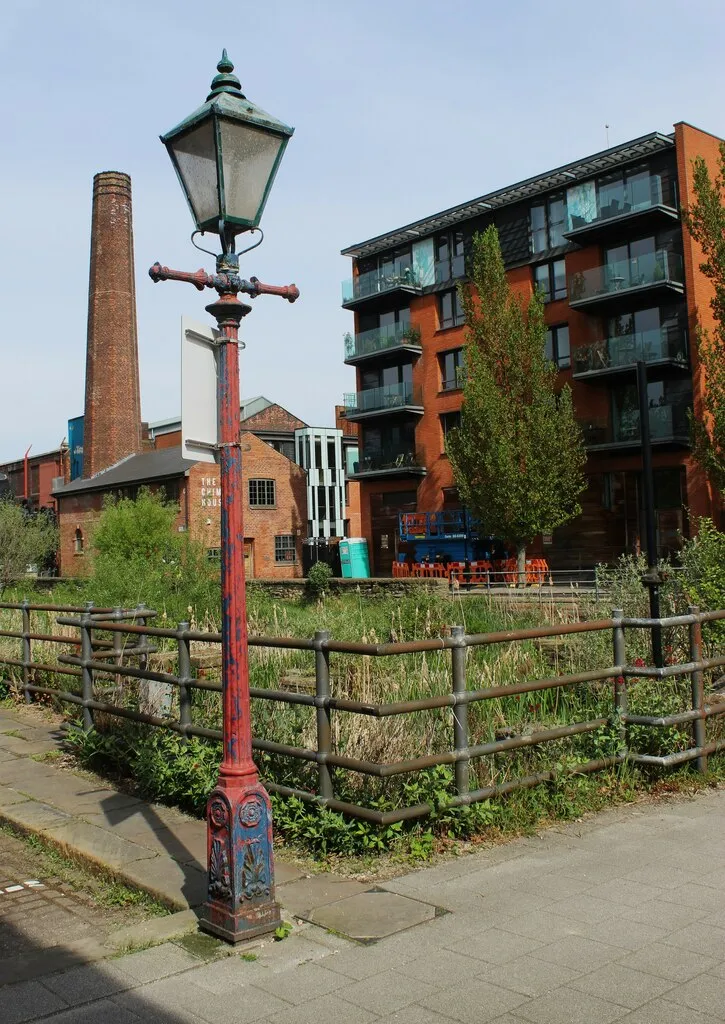
Photo: Dave Pickersgill , CC BY-SA 2.0, via Wikimedia Commons
There is a particular hour in a British November when the sky goes the colour of a drained teacup and the streetlights haven't quite decided to come on. Stand still in the right back street and you'll catch something most towns lost a century ago: a hiss, a tick, a small yellow flower opening behind glass.
That's a gas lamp coming to life. Not a replica, not a heritage prop behind a rope — a working one, plumbed into the mains, doing the same job it has done since gas first spluttered into London in 1807.
Britain still has them. Not many, but more than you'd think, and they are scattered in the oddest places: the grandest squares in Westminster, a hillside town in Worcestershire, a leafy estate in Nottingham, a village or two in Shropshire that nobody outside the county could place on a map. They survive partly through civic stubbornness and partly through the quiet labour of a very small number of people who still know how to look after them.
A sound you feel before you hear it
Gas light doesn't arrive like electric light. Electric light is a switch — instant, indifferent, a bit smug about it. Gas is a process. There's the faintest breath of unburnt gas, the pop of ignition, then that low, contented roar as the mantle — a fragile little bag of fabric that glows white-hot and never actually burns — settles into its work.
In the streets where lamps are still lit by hand, someone walks the same route every evening, carrying a long pole with a hook and a pilot flame on the end. Up it goes, a turn of the little lever, and another one's away. The lamplighter's round is one of the oldest jobs in the city and one of the least necessary, which is exactly why it feels like a small act of defiance.
Elsewhere, the lamps light themselves. Many posts carry a clockwork timer in the base — a mechanism that can be wound and set to trigger at a given hour, wound again a week or so later. On short winter days that means someone walking the round in daylight, crouching at each post with a key, keeping the town's evenings on schedule by hand anyway. It is maintenance rather than theatre, but the result is the same: a street that switches on in ones and twos rather than all at once.
The pole, the glass and the mantle
What surprises people most is how ordinary the kit is. A lamplighter's pole looks like something you'd use to open a high window. The lanterns are glass panes in a cast-iron frame, and they need cleaning, because a dirty pane turns a good flame into a smudge. The mantles are delicate enough that a gust through an open door can finish one off, and they're replaced the way you'd change a bulb, only with more swearing.
Then there's the gas itself, which behaves in the cold the way gas always has: reluctantly. Frost on the pipework, condensation in the lantern, a flame that sulks at ankle height until it warms up. Nobody rushes a gas lamp. You learn to stand there.
Westminster keeps the largest surviving collection in the country — roughly a thousand of them, depending on who's counting and whether the ones on private land are included — and it is still, as far as anyone can tell, the only place in Britain with a proper team of lamplighters on the payroll. The rest of the country's lamps are looked after by councils with a maintenance contract, by estates with a sense of history, or by volunteers who have quietly taken on a piece of street furniture the way other people adopt a roundabout.
Where to find a flame
The honest answer is: not where you'd expect, and rarely all in one place.
In London, head for the backstreets rather than the landmarks. The Temple, the lanes behind Covent Garden, the Georgian terraces around St James's, the edge of the Royal Parks — anywhere the pavement still has a certain self-importance about it. Go at dusk in winter and walk slowly; you'll notice the colour before you notice the source. Gas throws a warmer, softer light than LED, and it moves. That's the giveaway. A gas flame never quite sits still.
Outside the capital, the lamps tend to belong to places with a strong sense of themselves. Malvern has them. Worcester has them. The Park Estate in Nottingham is famously lit by gas, as are pockets of Bath, Buxton and a scatter of towns in the Midlands and the West Country where the lamp column is old enough to have a small door in it.
A useful test: look at the lantern. If the frame is heavy cast iron, if there's a little hinged hatch at the base of the post, if the glass has that faintly greenish tint of old manufacture, you're probably looking at gas. If nobody has painted over the mechanism in forty years, you almost certainly are.
The theatre of a town going dark
What these lamps do, beyond lighting a pavement, is give dusk a shape. Electric streetlighting arrives as a single event: the whole town flips from day to night in one indifferent second. Gas gives you a slow fade, lamp by lamp, street by street, with a human being somewhere in the middle of it.
That's the bit worth protecting, and it isn't really about nostalgia. It's about the fact that a town which lights itself by hand is a town that has decided the ritual matters — that there is a difference between illumination and care. You can light a street with anything. Lighting it the long way round says something about how you feel about the place.
There is also, let's be honest, a cost argument. Gas lamps are fiddly, they need parts that aren't made any more, and they're not as efficient as the thing you'd buy in a box. Councils have been quietly retiring them for decades. The ones that remain tend to survive because somebody locally kicked up a fuss — a residents' association, a conservation officer, a man who has been writing letters about the lamp outside his house since 1998.
Standing still for a moment
The best way to see one is not to look for it. Wait for a cold afternoon, pick a street old enough to have a name that sounds like a person, and hang about in the blue hour. Listen for the hiss. Watch for the flutter.
Then walk on, and let the rest of the town switch itself on behind you. It won't last forever — nothing does, and gas lamps least of all. But it's still happening, tonight, in a few streets in a few towns, and somebody is still doing the round.