The Teddy Bear in Bay Nine: A Morning Among Britain’s Lost Things
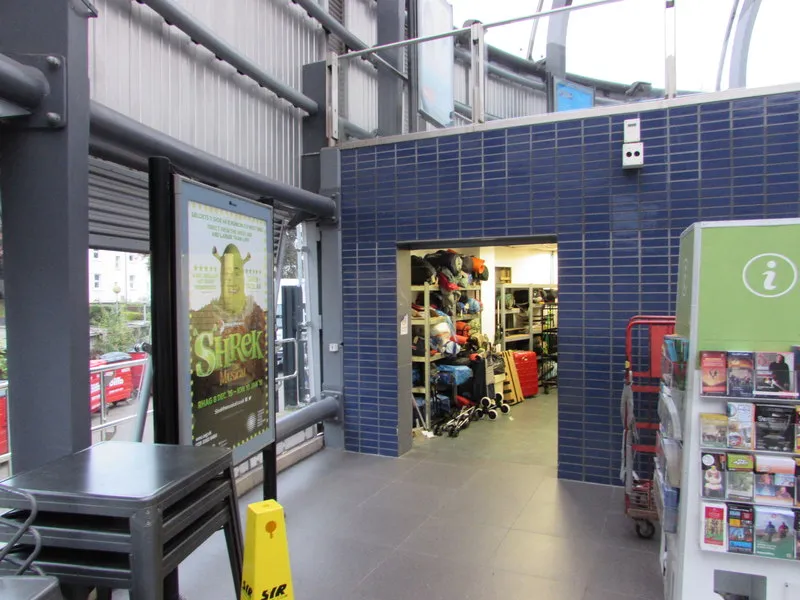
Photo: Jaggery , CC BY-SA 2.0, via Wikimedia Commons
The door is unmarked from the platform side, which feels about right. You would not want to advertise a room full of other people’s mistakes. Inside, the air smells faintly of wet nylon and rubber soles, and a clerk is holding a green umbrella as if it were a small, troublesome animal. “This one’s been here since August,” she says, not unkindly. “Someone loved it once.”
This is a railway lost property office, though “office” barely covers it. It is part storeroom, part lost-and-found desk, part quiet museum of British absent-mindedness. There are shelves of bags, a crate of phone chargers, a box labelled, with admirable optimism, “glasses — possible”. And in bay nine, sitting upright like a passenger who has missed every announcement, is a teddy bear.
He has been there for months. He is not valuable in the way a laptop is valuable. He is valuable in the way a teddy bear is valuable, which is to say: completely, and only to one person.
The Shelves That Remember
Britain’s railway lost property system is not one single room. Major stations have their own offices; train operators run their own processes; Transport for London has its famous lost property office at Baker Street, where the inventory has over the years included urns, prosthetic limbs and a full set of bagpipes. The details vary, but the ritual is recognisable. An item is handed in. It is logged, tagged, bagged and given a number. Then it waits.
The waiting is the point. Most offices keep items for around three months, though the clock starts when the item is logged, not when you first notice the gap in your life. After that, depending on the operator, the object may be donated, recycled, sold at auction or simply disposed of. The clerk’s job is not to judge the object. It is to catalogue it, store it and, if someone comes forward with a decent description, reunite it.
That last part is harder than it sounds. “People say ‘a black umbrella’,” says the clerk. “We have forty black umbrellas.” She asks for details: the handle, the tie, the small tear near the spoke. Sometimes the description is so precise it is almost tender. Sometimes it is a photograph on a phone, and the phone is in the bag they are looking for.
A Taxonomy of Forgetting
Spend an hour among the shelves and you begin to sort lost things into categories. There are the commuter casualties: umbrellas, gloves, scarves, headphones, the occasional shoe. There are the holiday hangovers: sun hats in November, beach towels, a plastic bucket and spade that has clearly seen better days. There are the deeply personal items that make you wonder at the story: a wedding album in a carrier bag, a child’s drawing folded into a wallet, a single house key on a red ribbon.
And there are the objects that seem to have been left behind by accident, but might not have been. A paperback with a bookmark halfway through. A pair of glasses in a case. A lunchbox with a name sticker peeled off. You could read a whole life into a lost lunchbox, if you had the time.
The clerks do not have the time. They have a logbook, a label printer and a trolley. But they notice. “You get a feel for the ones that matter,” one says. “A carrier bag with a wet towel in it? Not urgent. A child’s toy? You put it somewhere you can see it.”
The Auction and the Unclaimed
After the holding period, the unclaimed items move on. Some are sold at auction, often in mixed lots, to dealers and curious bargain hunters. Others go to charity. The money, where there is any, goes back into the system. It is a practical arrangement, and also a slightly melancholy one: your lost umbrella becomes someone else’s good find, your forgotten scarf a line in a lot description.
But not everything is sold. Some items are simply too odd, too bulky or too personal. The teddy bear in bay nine is not for auction. He is waiting, in the way that lost things wait, for a person who may have already decided that he is gone.
Why do some things never get collected? The reasons are rarely dramatic. People forget the office exists. They assume the item is gone for good. They move house, change jobs, stop taking that train. Sometimes the cost of returning — a phone call, a journey, a form — is more than the object is worth. And sometimes the object belonged to someone who has died, and claiming it would mean admitting that.
The clerks know all this without needing it explained. They are not sentimental about every umbrella. But they are careful with the things that carry a name.
What We Leave Behind
There is a temptation to make lost property into a metaphor. The umbrella as a small failure of memory; the single glove as a ghost of a hand. But the room resists metaphor. It is too practical for that. It is a place of labels and shelves and opening times. It is also, quietly, a place of hope. Someone might come. Someone often does.
On the desk, a phone rings. A man is asking about a bag he left on the 14:17 three weeks ago. The clerk takes the details, checks the log, and says she will call him back. She does not sound hopeful, but she does not sound hopeless either. She has seen stranger reunions.
In bay nine, the teddy bear keeps his own counsel. He has a label around his neck now, with a number and a date. He is not lost, exactly. He is just waiting to be remembered. And in a room full of forgotten things, that is a surprisingly cheerful thought.