The Last Great Mixer: A Sunday Spent in the Carvery Line
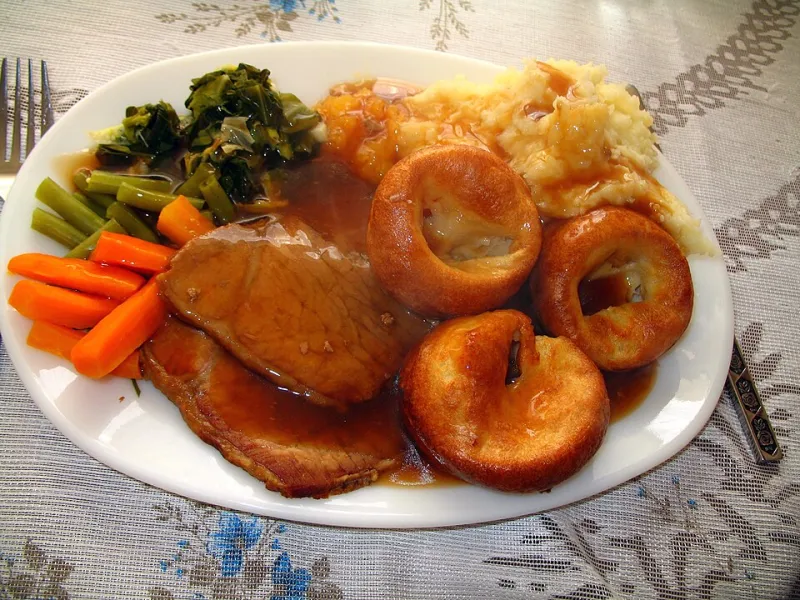
Photo: by robbie jim, CC BY 2.0, via Wikimedia Commons
It is 11:52 on a Sunday morning and the car park of the King's Head is already three-quarters full. Nobody is inside yet. The doors open at twelve, and yet here they are — a man in a fleece checking his watch, a young couple with a toddler strapped into a buggy, two blokes in yesterday's shirts squinting into the daylight like they've been personally offended by it. They are not queueing, exactly. But they are arranged. And when the latch goes, they will move as one toward the carvery counter, and the great British ritual will begin again.
The Twelve O'Clock Shuffle
There is a particular choreography to the carvery queue that nobody teaches and everybody knows. You join it. You do not loiter by the condiments. You do not, under any circumstances, ask the person ahead of you what the Yorkshire puddings are like — you can see the Yorkshire puddings. They are right there.
The queue forms in loose order, then tightens near the counter. At the front, decisions are made under mild pressure: small plate or large, beef or turkey or both, stuffing yes, crackling if you're lucky. Behind, the rest of us rehearse. We are all, in our heads, already holding the tongs.
What strikes you, standing in it, is the mix. A woman in her eighties with a walking frame, patiently explaining the gravy situation to a teenager behind her. A dad balancing a pint and a plate. A group of lads who have clearly come straight from somewhere that ended at 4am, blinking at the cauliflower cheese as if it might be a mirage. Everyone is here for the same reason and nobody is pretending otherwise. That, in 2026, is rarer than it should be.
Tongs, Please: The Unwritten Rules
The etiquette of the carvery is its own small constitution. Chapter one: the tongs go back where you found them, and if you drop them, you tell someone. Chapter two: the Yorkshire pudding is not a garnish, it is a structural element, and taking the last one without glancing behind you is a hanging offence in at least four counties.
Chapter three concerns gravy. There is a school of thought that gravy should be applied at the counter, and another that it should be carried to the table in a jug, and the two schools do not always see eye to eye. At the King's Head, the gravy is ladled by the carver himself, which settles the matter and gives him the quiet authority of a man who has seen it all before.
Then there is the matter of the plate. A small plate is a statement of intent: you are here for a sensible lunch. A large plate is a confession. Most of us, given the choice, confess.
Three Rooms, One Ritual
The pub carvery is the classic, but it is not the only version. Drive twenty minutes and you'll find the hotel carvery — same ritual, slightly better chairs, a bit more carpet, a pianist in the corner on a good day. The queue is the same. The tongs are the same. The gravy is, if anything, more earnest.
And then there is the working men's club. Here the carvery is less an event than a service, folded into the club's weekly rhythm alongside the meat raffle and the bowls results on the noticeboard. The plates are hotter, the portions are larger, and the queue is shorter because everyone knows exactly when to arrive. It is, in its way, the most honest version of the whole thing: no branding, no specials board, just a roast dinner and a room full of people who have known each other for decades.
What all three share is the thing you notice most: nobody is performing. There is no dress code, no correct answer to what you're having, no table you need to be seen at. You turn up, you queue, you eat, you say thank you to the person with the ladle. That's it.
The Economics of a Warm Plate
It would be easy to be sentimental about all this, and the carvery resists sentiment by being stubbornly practical. A large carvery in 2026 will set you back somewhere between £12 and £18 depending on where you are and how ambitious the Yorkshire puddings are. For that you get a hot meal, a seat, and the distinct feeling of having been looked after.
Pubs have had a hard decade, and the carvery has quietly become one of the few reliable engines in the Sunday trade. It fills rooms that would otherwise sit empty until 3pm. It brings in families who might not otherwise come in at all. It gives the kitchen a reason to open on a day when the alternative is a lot of crisps and a quiet till. In a week where every other meal out is a negotiation, it is one of the last genuinely affordable sit-down lunches left.
Why It Still Works
There is a version of this country where everyone eats separately, at their own convenience, from their own app, and the carvery is a museum exhibit. That version exists, in parts. But the queue at the King's Head suggests otherwise. It suggests that people still want a room where a pensioner and a hungover student can wait for the same roast potatoes, and nobody finds it strange.
At about ten past one, the queue shortens. The carver wipes his hands. A family of five settles in by the window, the toddler already sticky with apple crumble. The lads have ordered another round of squash and are beginning to look human again. Somewhere behind the counter, a fresh tray of Yorkshire puddings goes out.
You don't need a reservation. You don't need to know anyone. You just need to join the line — and wait your turn, like everybody else. In 2026, that might be the most quietly radical thing left on a Sunday.