What the Wall Remembers: A Field Guide to Blue Plaques and Their Silent Neighbours
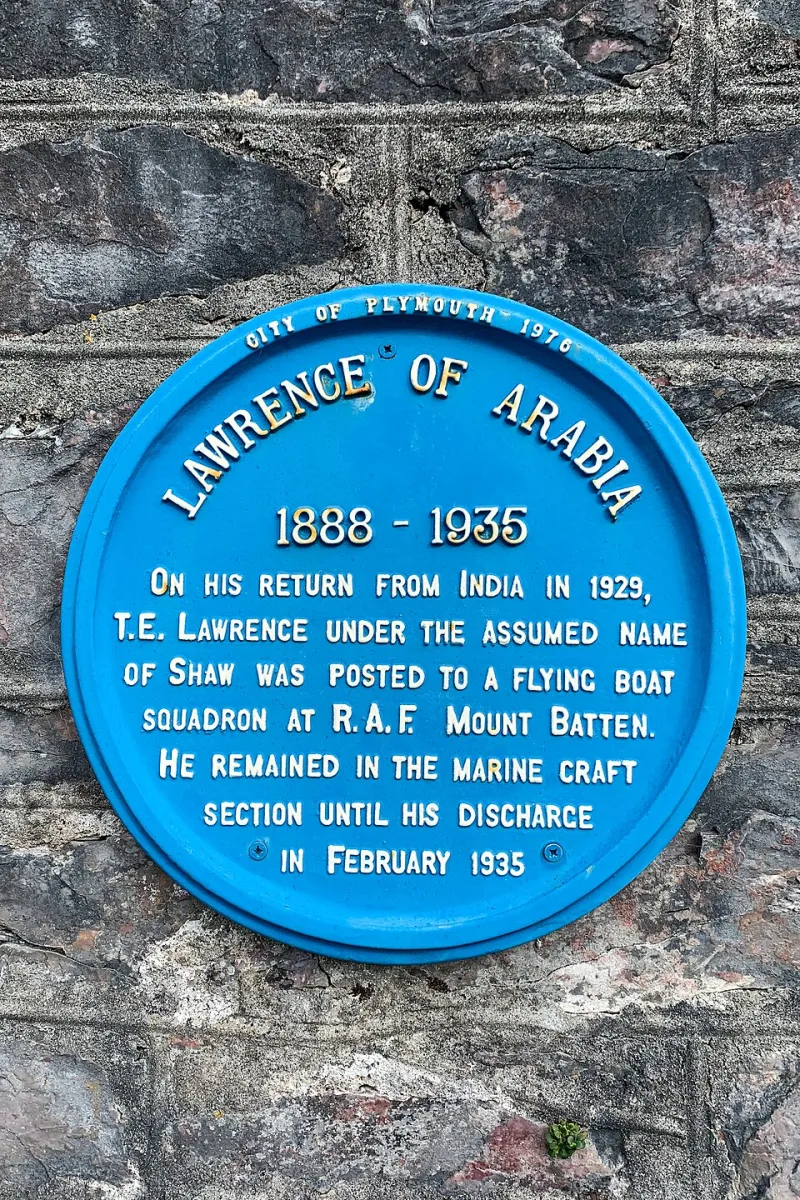
Photo: .mw-parser-output .messagebox{margin:4px 0;width:auto;border-collapse:collapse;border:2px solid var(--border-color-progressive,#6485d1);background-color:var(--background-color-neutral-subtle,#fbfcff);color:var(--color-base,#202122);box-sizing:borde
There is a particular kind of walk you can take in almost any British town where you stop looking at the shopfronts and start looking upwards. Above the baker, beside a doorway, tucked under a first-floor window: a small blue rectangle with a name on it. It might be enamel, it might be painted metal, it might be slightly faded and held on with screws that have seen better decades. It is a plaque. And whether the town knows it or not, it is having an argument with itself.
I took that walk recently in a town I know well enough to get lost in — a Midlands sort of place, with a market square, a church, a ring road that nobody loves, and a high street that is doing its best. I wasn’t looking for a specific person. I was looking for the pattern. Which lives had been lifted out of the ordinary terraces and fixed to the wall? Which had been left to dissolve into the brickwork?
The brass names and the brick names
The first plaque I found was for a Victorian businessman. Not a cruel one, as far as the town remembers; a benefactor, apparently. He paid for a reading room, gave land for a park, and had the good sense to die before anyone could ask awkward questions about where the money came from. His plaque is polished. It gets mentioned in the local history leaflet. There is a street named after him, too, which is a kind of plaque you can walk on.
Two streets away, there is a row of cottages with nothing on them at all. In one of those cottages, according to a woman at the heritage centre, a seamstress lived who organised a strike in the 1880s. Not a famous strike. A small, spiky, local one. It lasted a week and achieved very little except a slightly better rate for hemming and a reputation for being difficult. There is no plaque. There is no street name. There is a wheelie bin where the story might otherwise go.
This is not a scandal. It is just how remembering works. Plaques tend to honour people who left a building, a fund, a book, a company, a collection of letters. They favour the documented. They favour the ones whose lives were already being written down by someone with a decent fountain pen. The seamstress left a newspaper paragraph and a lot of thread.
Who gets the enamel treatment?
Blue plaques are not a single national scheme, which is the first thing to understand if you want to read them properly. English Heritage runs the famous London scheme, but up and down the country it is councils, civic societies, universities, museums, developers and occasionally a determined neighbour with a drill who decide who gets one. Some towns have formal panels. Some have a folder and a willing volunteer. Some have nothing at all until a pub gets refurbished and suddenly there is a plaque about a poet who may or may not have slept there.
The result is a landscape of uneven memory. A town might have three plaques for men who were born elsewhere, made their fortune elsewhere, and spent eighteen months in the town being mildly unpleasant to the servants. Meanwhile, the woman who ran the maternity home, the man who built the first proper drainage system, and the family who sheltered evacuees are remembered only in the oral history recording that nobody has digitised yet.
I am not against the plaque. I like the plaque. I like that a town bothers to say: this happened here. But I have started reading them less as facts and more as choices. A plaque is a sentence that begins: We decided this person mattered enough to interrupt the brickwork. The interesting question is always the next one: who didn’t we decide?
A practical field guide to reading a street
If you want to do this walk yourself, here is a rough guide. It is not rigorous. It is not official. It is just a way of looking.
Start with the wording. A plaque that says “lived here” is doing something different from one that says “was born here” or “worked here”. Birth is an accident. Work is a contribution. “Lived” is often a polite way of saying “stayed for a bit and we are stretching it”. None of this is dishonest, exactly, but the verb tells you what the plaque wants you to feel.
Notice the colour and the material. Blue is the classic, but you will find green, brown, black, stone and brass. Different schemes, different eras, different committees. A plain metal plate bolted to a wall by a local history group can be more revealing than a slick official plaque, because it tells you someone fought for it.
Look at the building above the plaque. Is it a grand house, a terrace, a chapel, a factory gate? Plaques cluster where buildings survive. A town that knocked down its Victorian workers’ housing has also knocked down the walls that might have carried the names of the people who lived in it. Conservation and commemoration are cousins.
Find the memorial benches. They are plaques by another name, and they are often more democratic. A bench by the canal with a small brass plate — In memory of a man who loved this towpath — is a kind of history that rarely makes the leaflet. It tells you who actually used the place. It tells you what a town feels like from sitting height.
Check the omissions. Walk the same street twice. Once looking for names. Once looking for gaps. The war memorial will list the dead. The chapel will list the ministers. The pub will list the landlords. Who is missing from the list? The women who ran the Sunday school? The Irish labourers who built the railway? The shopkeeper who kept the lights on during the blackout? The absence is not proof of malice. It is usually proof of who had the time, the money and the confidence to write things down.
The plaque as a small, hopeful act
By the end of my walk, I had found eleven plaques and about forty stories that weren’t on any wall. I had also found a hand-painted sign in a window saying This shop was a bicycle repair workshop from 1932 to 1971, which is not a blue plaque but is doing the same job with less ceremony. And I had found a bench, a postbox, a chapel noticeboard and a chip shop menu all quietly keeping the town’s memory in their own way.
That is the thing about remembering. It is not a single official list. It is a crowded, messy, occasionally unfair conversation between the people who put things up and the people who notice what is missing. A blue plaque is not the final word. It is an invitation to look up, then look around, then ask the question that every street is waiting for: who else lived here?
If you go for the walk, take a notebook. The wall will tell you what it has chosen to remember. The pavement will tell you the rest.