While You Wait for the Soil: Dispatches from the Allotment Queue
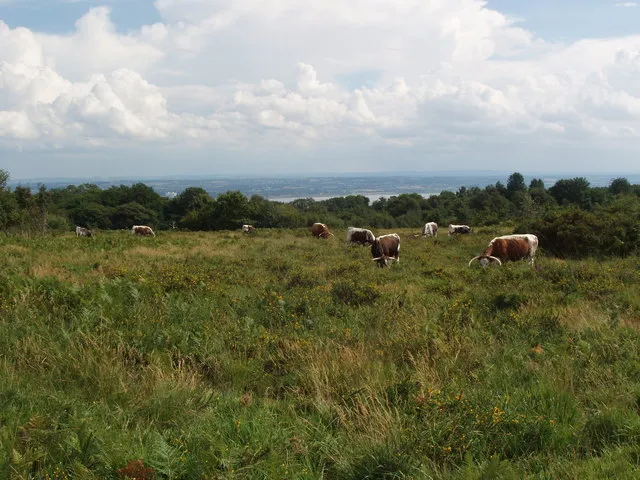
Photo: Christopher Clift, CC BY-SA 2.0, via Wikimedia Commons
There is a particular kind of optimism in signing up for something you will not get until a decade from now. On a Tuesday in Norwich, a woman in her thirties fills in an online form promising herself a plot, ten poles of loam, a watering can of her own. The confirmation email arrives within seconds. The plot does not.
Britain's allotment waiting lists are one of the quiet absurdities of ordinary life. You register, you receive a cheerful acknowledgment, and then a small part of your future is parked indefinitely. Ask around and the numbers come back like folklore: three years in one town, five in the next, twelve in a city where the site secretary has stopped giving figures out of sheer weariness. In a handful of places the list has been politely closed.
Yet the queue keeps filling. That's the interesting part.
What the list actually is
In England, the requirement is old and unglamorous. Since the Small Holdings and Allotments Act of 1908, councils have had a duty to provide plots where six or more registered electors ask for them. Scotland works to a different framework, with its own strategy and its own stubbornly long waits. In practice, most provision sits with parish and town councils, district authorities, private site associations and a surprising number of land trusts.
What nobody guarantees is land. Plots get built on, sold off, absorbed into ever-larger gardens. The ones that remain become contested and beloved in equal measure — half a hectare of cabbages behind a housing estate, defended with the ferocity of a national park.
So the lists grow, and would-be growers discover an important distinction. There is the council list, and then there is the site list, and they are not always the same queue. Parish councils may hold plots the district authority knows nothing about. A residents' association might manage eight and never advertise. Some sites have vacancies going quietly in February and a hundred names by May.
The things worth doing before you get the call
A few practical notes from those who have been through it.
- Join more than one list. Parish, district, and any allotment society within cycling distance. Then confirm in writing, once a year, that you still exist. Lists are often culled for non-response.
- Ask about halves and quarters. A five-pole plot is far easier to come by than ten, and much kinder to a first year of parenthood or night shifts.
- Introduce yourself to the site representative. Not to jump the queue — to be known. Vacancies are often offered, informally and legitimately, to someone the committee has met.
- Ask about neglected plots. Many sites carry derelict holdings that need clearance before they can be let, sometimes on a temporary agreement. Clearing brambles for a season is its own education.
- Turn up to work days. Half a morning of hauling woodchip buys more goodwill than any email.
None of this is queue-jumping. It's simply the difference between being a name on a spreadsheet and being a person who might reasonably be trusted with a strimmer.
Growing anyway
Meanwhile, the windowsill fills up. This is the quiet heart of the matter: people don't wait to start gardening. They garden at a smaller and more ridiculous scale.
There is the couple in a Bristol flat with eight chilli plants under a cheap grow light and a running argument about the radiator. There are the borrowed back gardens — the neighbour who can no longer bend, the aunt with a sunless patch behind a garage, the note through the door that says, tentatively, 'we have a bit of space if you'd like to use it.' There is Landshare, and there are the community orchards, and there is the churchyard in a Yorkshire village where three families now grow beans between the headstones with the vicar's blessing.
Community gardens occupy a particular role here. They are not allotments, and most don't pretend to be — shared beds, committee decisions, a rota for the hose. But they teach the things a plot teaches: that a seed is a bet, that a drought is a lesson, that a glut of courgettes is a social problem requiring diplomacy. And they tend to be the fastest route into the network. Volunteer for a summer and you will hear, three weeks before it becomes public, that Mrs Ashworth is giving up number fourteen.
The seed-swap economy
Alongside the formal queue runs an informal one made of envelopes. Seed swaps take over church halls and library meeting rooms from late January, running on reused jam jars and a loose honour system. You bring a packet, you take a packet, you label things honestly. It is one of the last functioning gift economies left in the country, and it is entirely built on people who have more seed than they need because they saved it in a moment of misplaced enthusiasm.
It is also a way of belonging before you own anything. Nobody asks a man at a seed swap whether he has a tenancy. They ask what he grew last year and whether the slugs won.
The point of the wait
It would be easy to treat the queue as a failure of policy, and to some degree it is one. Land is finite, development pressure is relentless, and the wait will not be fixed by goodwill alone. But the waiting itself does something odd to people. It makes them observant. They learn the sun's path across a borrowed patio, the habits of one pot of mint, the fact that a tomato does not care whether you have a plot or a bucket.
When the letter finally arrives, usually from a name you half recognise and a number you've stopped expecting, the plot will be a mess. Brambles, a broken shed, soil like brick. You'll stand there with a spade and no idea, and remember that you've been practising for years without calling it practice.
And then, in the way of these things, someone two plots along will lean over the fence and offer you a rhubarb crown. Take it. That's the whole system, really — not the list, not the lease, but the passing of something alive across a boundary.